

Read an extract from Pets & their People
It is in conversation with others that we learn what we ourselves are: that we recognize and refine the first-person sense we call consciousness. The novelist Edith Wharton wrote that her relationship with her first dog, Foxy, made her a ‘conscious, sentient person’. Catastrophic though its consequences might have been, it was the first recorded conversation between an animal (the serpent) and a human that led to the eating of the fruit of the tree of knowledge and evil, and directly to the self-knowledge that showed the first humans they were naked.
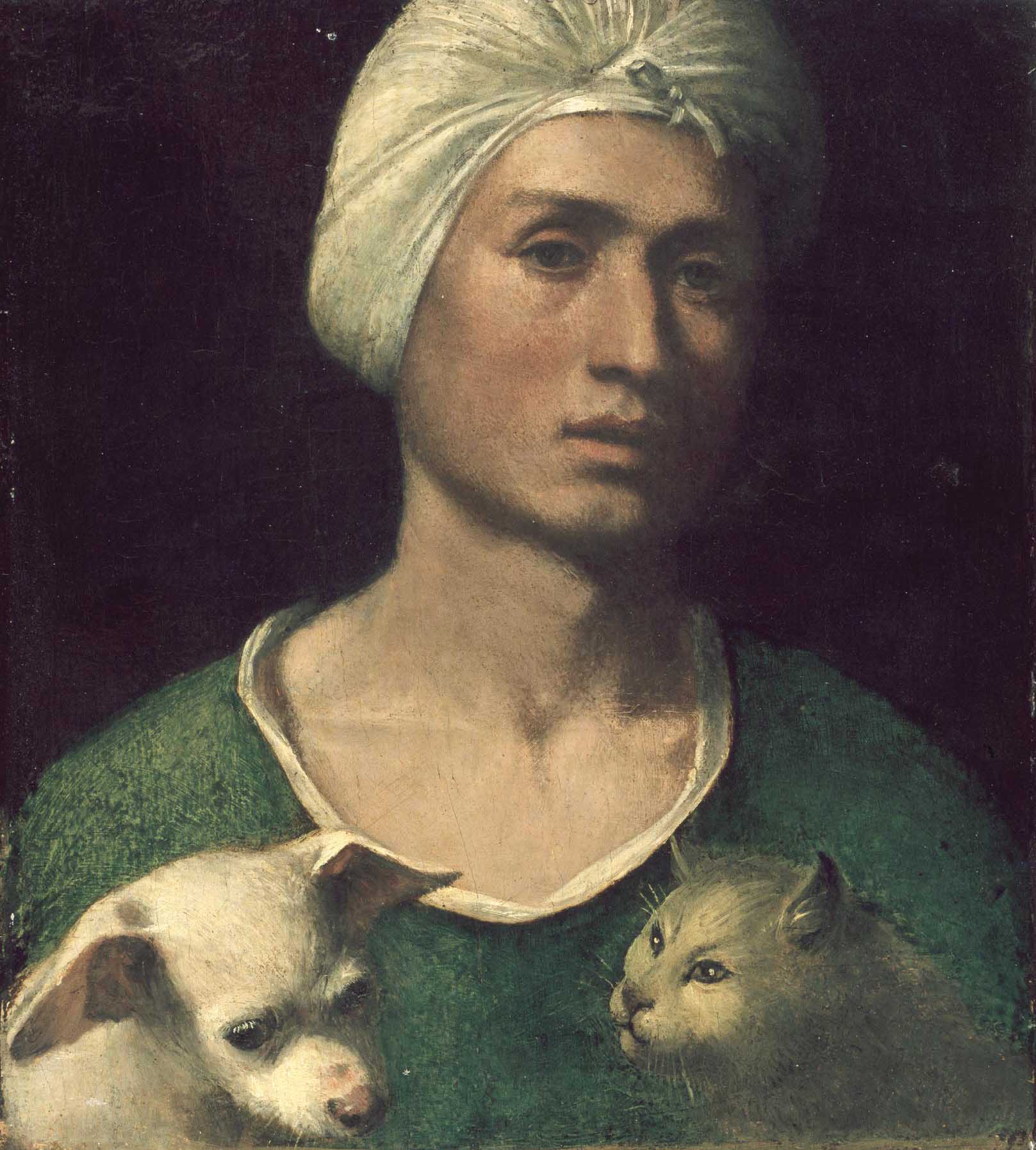
Sixteenth century: a dog and a cat as two sides of a human personality. Portrait by Dosso Dossi, 1508–1510. Image © Ashmolean Museum, University of Oxford.
In all cultures and all ages, talking animals have told us about ourselves, from Anubis (whom, if the Egyptians were right, we will meet for better or worse in the afterlife) via Aesop, Hans Christian Andersen, Alice in Wonderland, Beatrix Potter, Alison Uttley, The Jungle Book, to Animal Farm, Dr Seuss, Narnia, The Magic Roundabout, and Philip Pullman’s daemons. Nowadays, fictional animals are being supplanted by other avatars. It will be interesting and scary to see (probably on psychotherapists’ couches in several centuries’ time) what effect this has on our self-knowledge and self-image.
For most of us, though, the first experiences of the great adventure of caring are likely to have been with toy animals. We feed, groom and sing to teddy bears before transferring our affections to humanoid dolls or, indeed, to real humans.
Some of us never transfer our affections from animal toys to ‘real’ things. Throughout John Betjeman’s life his childhood bear, Archibald, was ‘The only constant’, though at the age of 9 Betjeman hid him in a loft, scared that his father would think him ‘soft’. Musing in the poem ‘Archibald’, Betjeman acknowledges that some might think his own continued dependence on the bear denotes some deep-seated pathology, but cannot deny Archibald’s enduring significance:
And if an analyst one day
Of school of Adler, Jung or Freud
Should take this aged bear away,
Then, oh my God, the dreadful void.
Though a Freudian analyst might seize the bear, I doubt a Jungian analyst would. Our governing Jungian archetypes are ancient, atavistic and zoological, and congenially represented by a toy bear in the bed.
We put animals on our children’s plates, wallpaper, pyjamas and bedsheets, and apart from bears (something of an anomaly, resulting from shrewd commercial exploitation of Teddy Roosevelt’s order for the euthanasia of a wounded bear in a Mississippi wood in 1902), the animals depicted are usually species commonly kept as pets – and dogs and cats in particular. It is so commonplace that we do not note the strangeness.
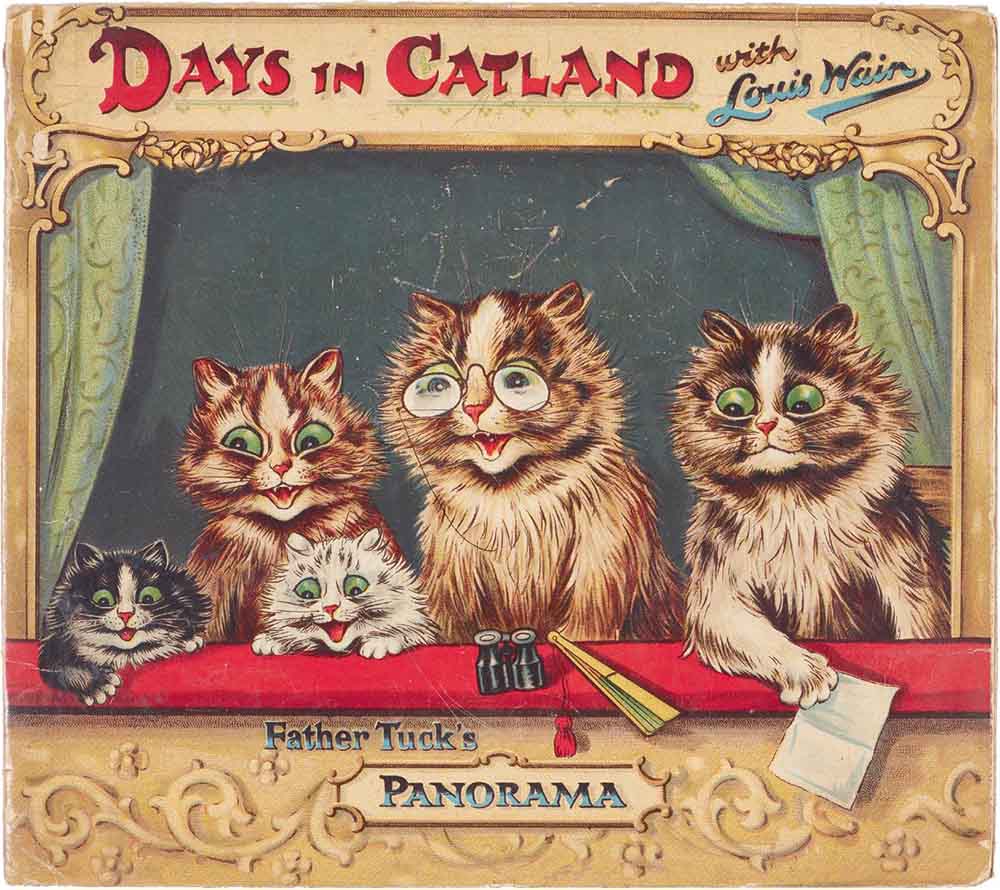
Humanizing cats or cat-izing humans? Louis Wain, 'Days in Catland', 'Father Tuck's Panorama', 1901. John Johnson Collection, Bodleian Libraries.
We, as adults, spend our lives valuing mortgages, riches and professional preferment, yet we value our children above all, and when we want to do right by them we surround them not with graphs of interest rates or icons of the boss we want to impress, but with pictures of cats. We apparently want our children to take their cues from the animals who accompanied us on our walk through evolution, rather than from the mores that rule our own lives. It’s as if we delegate the most important part of our children’s education to another species. We employ dogs, cats, hedgehogs and mice as moral wet nurses. And they do a very thorough job…
In many societies, interactions with animals are seen as ethical gyms, in which a child’s good moral instincts can be strengthened by diligent working out. Better to get one’s ethics right in the relatively safe environment of pet ownership than to learn ethical behaviour in other arenas, where more harm can be done by the unpractised. For Christopher Smart, who celebrated the ownership of his cat Jeoffrey in Jubilate Agno (1763), Jeoffrey was ‘an instrument for the children to learn benevolence on’.
This view was not merely the intuition of an earnest and sentimental poet: it had the highest ecclesiastical warrant. Thomas Aquinas declared that pity towards animals could provoke pity towards humans.1 In a late-fourteenth-century exemplum, a little girl, being brought up as a nun, is taught that she must love Christ. But that, it is recognized, is a high and hard calling. She should work up to it gradually, and the best way is to start by loving her abbess’s dog and bird.2 Many a modern parent similarly hopes that care for a hamster will transmute into care for a little sister…
1 Summa Theologica, Pars II 2a 2ae, quaest. XXV. Art III, Turin, 1922, vol. 3, pp. 149–55.
2 London, British Library, MS. Cotton Cleopatra D viii fol 109r–v.
Charles Foster is a Fellow of Exeter College, Oxford. His previous books include Being a Beast (2017), The Screaming Sky (2021) and Cry of the Wild: Eight Animals Under Siege (2023).
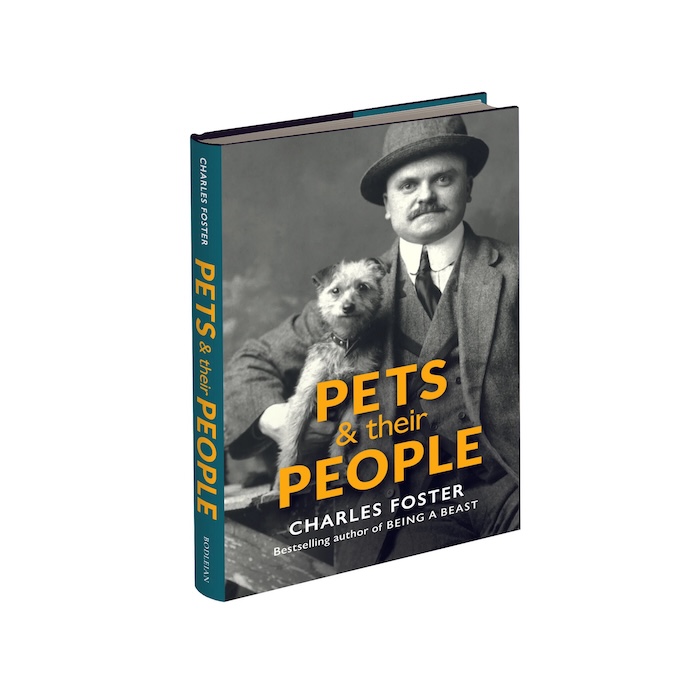
Pets & their People
Charles Foster
Bodleian Library Publishing
Hardback
176 pages | c.40 colour illustrations
£25

