

Read an extract from Bookbindings: An Illustrated History
Bookbindings make books work. At that most essential, practical level, we have needed bindings for as long as we have had books in the format we are familiar with: words on pages. Those pages need to be assembled in the right order and held together so we can turn them and move backwards and forwards.
Books are often needed for the long haul as well as for immediate consumption, so we also want to store those pages, to return a day or a decade later and still find them usable, in their proper sequence. The application of thread, glue and outer covers creates a structure to achieve all those ends: the textblock is readable, stable, protected and storable. Bindings are functional things.
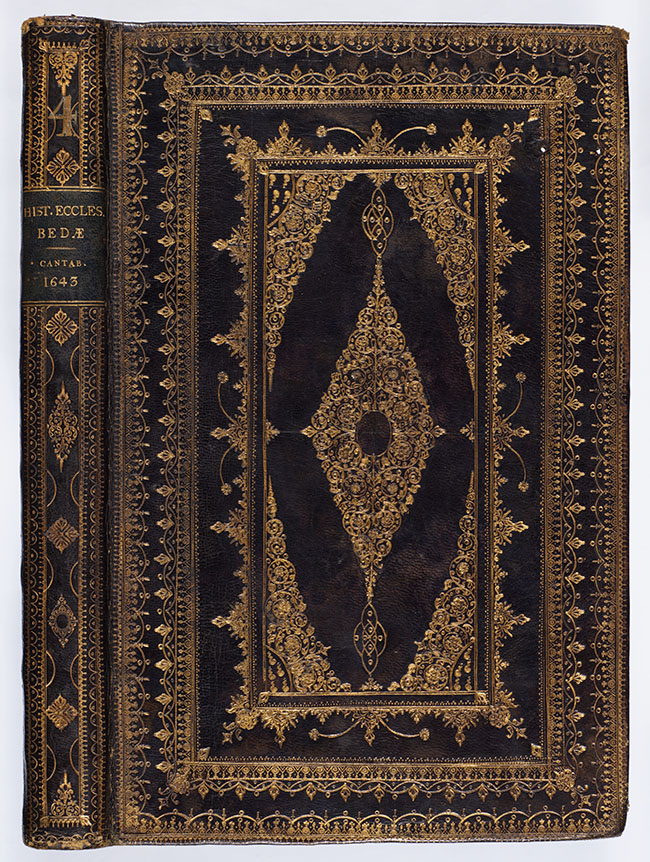
A handsome gilded binding made in Cambridge in 1643, intended to impress and flatter its recipient (the spine label, and the number 4 at the head of the spine, are later additions).
Bede, Historiae ecclesiasticae gentis Anglorum libri V, Cambridge, 1643. (Bodleian Library S.Seld. c.21)
What bookbindings can tell us
But there is a lot more than that to bookbindings, and a lot more to say about them; their history is much richer than the history of the cardboard box. Almost as soon as they began to be made, the human instinct to decorate its surroundings was activated, and book covers were given added embellishment. Techniques to achieve that became diverse and sophisticated, and it was soon possible for bindings to be more elaborate, and expensive, than they needed to be in order to be functional. They could be pleasing, impressive, beautiful – artistry in their own right. As such they could delight owners who liked lovely things, or help to make a statement about their wealth, taste and social status. Or they could infer something about the contents of the book.
In practice, a mixture of such reasons was usually in play, and teasing out that matrix of motivation is part of the benefit that bindings offer to book historians. We can admire a binding for its craftsmanship and aesthetic qualities, but we can go beyond that and think about the rationale behind its manufacture, and the influence it had on those who experienced it. People who study the history of book production used to be very focused on compiling lists of what was written and published, and when, in order to understand the evolution of human thought. Today, we have moved beyond that mindset to appreciate that we should be at least as interested in what was read as in what was produced, and what difference it made. Book history is about the social impact of books, and we gain insights into that by looking for evidence of interaction between books and their users.
We have, therefore, become much more interested in books not just as words and texts, but as three-dimensional designed objects with individual histories. Books are owned, inscribed, annotated, censored, mutilated, or otherwise changed as they pass from hand to hand. Curators and collectors have become attentive to the provenance of their books, to the traces people leave behind, and come to appreciate a written-in book more than a clean one. Bookbindings constitute an integral part of that evidence-base for the material book, and should be appreciated as such.
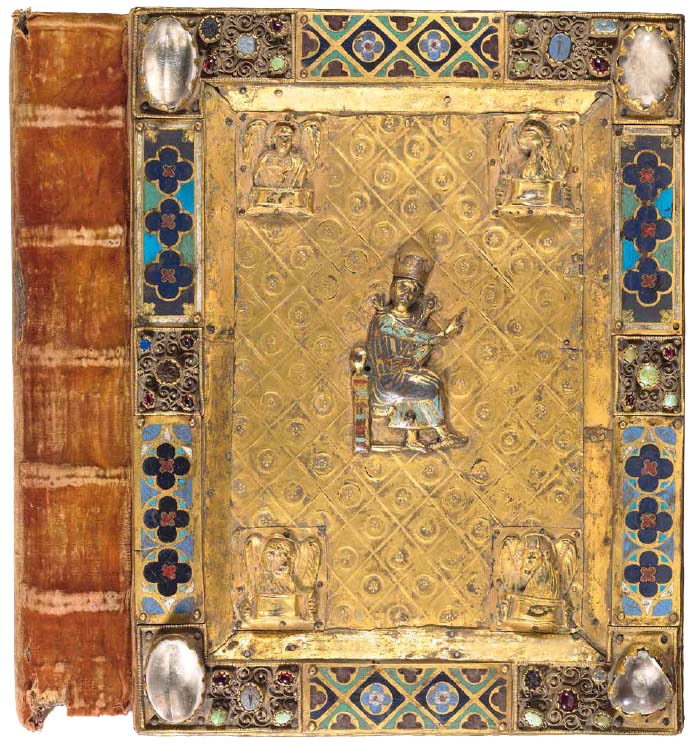
Making treasure bindings, with jewelled covers of precious metal, was a tradition throughout the medieval period for special books in wealthy institutions (the velvet spine is later).
Homilies, German, 12th century. (Bodleian Library MS. Broxb. 84.2)
The binding is the first thing that a user encounters when coming to a book, and first impressions matter. A binding may encourage a prospective buyer to make a purchase, or raise expectations as to what may be found inside. Bindings can tell us all kinds of things about where books have been, because they can be dated and localized. A book in a fifteenth-century Oxford binding, or an eighteenth-century Edinburgh one, is likely to have been first read in those places. We should not only delight in the visual and tactile qualities of bindings – though there is plenty of that to appreciate, from all periods of book-making – but also ask how the part they play in the histories of the books they cover contributes to their story, and what we might learn from that.
Through most of the last two millennia, binders have given their customers choices over the ways their books are bound. It is more limited today than it was three hundred years ago, but there are still elements of choice: you could take a copy of this book to a craft binder, have it taken out of its publisher’s binding, and rebound to your specification. Many books today can be owned in either hardback or paperback formats. Most of the bindings illustrated in this book were made when everything was handcrafted, and there was much greater choice from the outset. Handsome bindings, of the kind reproduced here, were always made alongside more workaday ones that met the needs of countless households, students and professionals. They all testify to the role that books have played in people’s lives, and should have equal merit in the book historical landscape. Bindings have not always been appreciated beyond their visual charms, and those which are not out of the ordinary or obviously luxury objects have often been wrongly dismissed as unimportant by curators and collectors.
Bookbindings: An Illustrated History will be published by Bodleian Library Publishing on 28 May.
David Pearson is a leading authority on the history of books, after a lifetime spent working with them, writing about them and owning them. His previous books with Bodleian Library Publishing include Provenance Research in Book History (2019) and Speaking Volumes: Books with Histories (2022).
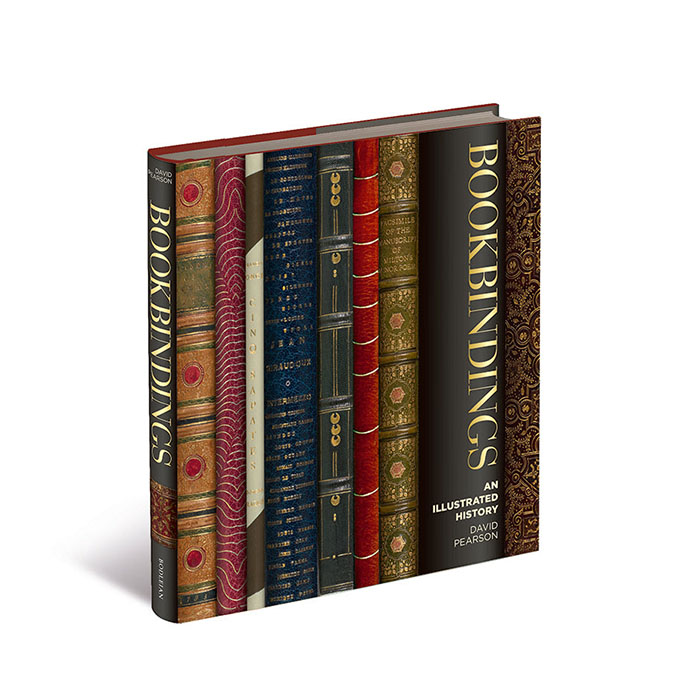
Bookbindings: An Illustrated History
David Pearson
Bodleian Library Publishing
Hardback
240 pages | 130 colour illustrations
£50.00

